This page presents a list of companies that offer microfabrication services. They are arranged in a way that it makes it easy to compare the processing technologies they use and their fields of specialization. Please use the information here for reference when looking for a partner that fits your own particular objectives.
* In order to make it easy to compare figures for different companies, all units are shown in millimeters (mm) (conversion standards: 1 foot = 304.8 mm, 1 inch = 25.4 mm, 1 µm = 0.001 mm).
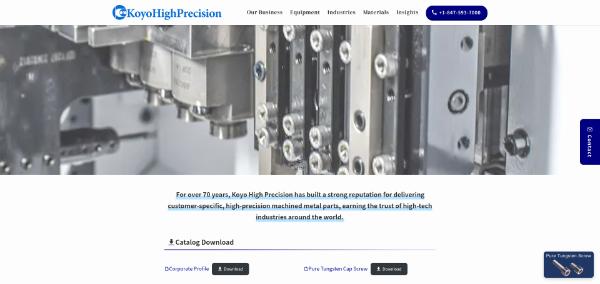
Koyo High Precision
Koyo High Precision is a manufacturer that excels at high-precision microfabrication for difficult-to-cut materials and hard, brittle materials such as tungsten and molybdenum. It can perform turning for pure tungsten with a tolerance of roughly ±0.003 mm (±3 µm), and it can also process high-performance materials such as platinum and Hastelloy. It can accommodate material diameters of 3 to 220 mm and lengths of up to 1,500 mm, and performs consistent quality control for everything from prototyping to mass production.
Fabrication services
Koyo High Precision primarily performs high-precision turning for round and cylindrical objects (such as shafts). It also offers cutting, machining, drilling, and other microfabrication services. It uses equipment such as NC lathes (chuckers, bar machines), machining centers, and drilling centers to perform high-precision processing.
Supported materials
The company can work with over 20 types of materials, primarily focusing on difficult-to-cut materials such as tungsten, molybdenum, and tantalum. All of these materials have high melting points and are exceptionally heat- and corrosion-resistant. This makes them highly suited for use in components that are used in harsh environments and require high levels of reliability, such as the components used in semiconductor production equipment or vacuum devices.
Supported sizes
Turning can be performed for materials with diameters of 3 mm to 220 mm. Lengths can be up to 1,500 mm for diameters of 12 mm or less and up to 700 mm for diameters of 32 mm (* specific conditions vary depending on the material size, so please inquire regarding details).
Machining can be performed for workpieces measuring up to 1,000 mm x 500 mm. Koyo High Precision's production system can perform precision processing for complex shapes such as plates and boxes.
Baker Industries is a high-precision manufacturer that combines CNC machining, welding, and metal 3D printing. It performs processing for components with complex shapes, achieving a tolerance of roughly ±0.005 mm (±0.0002 inch), and it has a track record of manufacturing aerospace and engine components. It works with a wide range of materials, from superalloys such as Inconel to PEEK plastic, and handles everything from prototyping to mass production.
Fabrication services
It primarily uses five-axis CNC machines to perform precision machining, and also offers fabrication and welding services such as MIG welding, TIG welding, and metal forming. Furthermore, it performs SLS 3D printing using printing and metal additive fabrication (metal 3D printing). Customers can select from a wide range of fabrication processes to meet their own application needs.
Supported materials
Baker Industries supports a wide range of materials. In metals, it can work with superalloys such as Inconel. In plastics, it can work with super engineering plastics like PEEK. It offers a lineup of materials for use in high performance components that require high levels of heat resistance, corrosion resistance, and strength, which are difficult to achieve with conventional materials, and for use in the manufacturing of special purpose components.
Ellison Technologies is a system integrator that sells machine tools and provides deployment support. It uses five-axis machining centers from partner DN Solutions, precision lathes, and other equipment to provide processing solutions. It can work with ceramics, quartz, and other difficult-to-cut materials and combines diverse technologies such as CNC machining, electrical discharge machining, and 3D printing.
Fabrication services
In addition to CNC machining and electrical discharge machining (EDM), Ellison Technologies also performs 3D printing and laser marking. Its production system combines high precision cutting and contactless processing for fast turnaround for components with complex shapes and for prototype models. Thanks to its process integration, it achieves high levels of quality while also performing manufacturing efficiently.
Supported materials
Ellison Technologies works with a wide range of materials, including not only difficult-to-cut materials such as ceramics, quartz, and silicon carbide, but also polyurethane, various plastics, carbon fiber, and stainless steel. It achieves a high level of finishing precision by selecting processing conditions based on the characteristics of individual materials, so it can meet the needs of various fields, including the semiconductor, medical device, optics, and aerospace fields.
TFG USA possesses superb microfabrication technologies that achieve micron-level (µm-level) precision. It focuses its efforts on micro-machining for medical devices. It can perform processing for medical microcomponents such as microneedles and microfluidic devices, and is able to perform high-precision processing even for medical-grade materials such as titanium and PEEK.
Fabrication services
TFG USA offers custom CNC machining services for a wide range of industries, primarily focusing on micro-machining for medical devices. Its five-axis machines perform precision cutting of complex shapes, and it uses Swiss screw machining to mass produce small diameter components. It also offers electrical discharge machining (EDM). Customers can select from its diverse menu of microfabrication processes based on their own needs.
Supported materials
TFG USA works with various materials used in medical and electronic components, including titanium, stainless steel, Inconel, nickel titanium, brass, and aluminum.
It also supports high performance plastics such as PEEK and PTFE, and it optimizes cutting conditions based on the materials it works with to produce consistent quality with little shape or precision deviation.
RapidMade uses stereolithography (SLA) 3D printing to manufacture high precision plastic and metal components. SLA is capable of reproducing minute forms with a thickness as small as 0.1 mm and a minimum detail precision of 0.25 mm, and it can be used with various materials, including ABS and PEEK. Another feature of RapidMade is that it can flexibly handle manufacturing of everything from prototypes to components that will be put into actual use.
Fabrication services
SLA uses photocurable resin, which hardens when exposed to ultraviolet light, to create shapes with a single-layer stacking accuracy of 0.1 mm (100 µm). It can also accurately reproduce minute characters, thin ribs, delicate protrusions and indentations, and the like.
Supported materials
RapidMade's 3D printing (SLA) can be used with plastic materials such as ABS, PEEK, urethane, and nylon. Materials and processing conditions can be selected based on how the finished articles will be used, and component fabrication takes weight reduction, heat resistance, and wear resistance into consideration. RapidMade also offers CNC machining of metals such as steel, aluminum, stainless steel, and titanium.
Supported sizes
SLA can be used to manufacture articles measuring up to 10.8 inch x 6.3 inch x 15.7 inch (approx. 275 mm x 160 mm x 400 mm). Batch output is available for up to medium-sized articles. Designs are recommended to have minimum detail sizes of 0.25 mm and clearances of 0.25 mm (0.010 inch).
OpTek Systems specializes in contactless microfabrication using lasers with a wide range of wavelengths, from ultraviolet (UV) to infrared (IR). It can process diverse materials, such as metal, ceramic, and glass, with a tolerance of roughly ±0.001 mm (1 µm) or less. It excels at high-precision laser processing for semiconductors and medical devices.
Fabrication services
OpTek Systems uses contactless lasers with zero tool wear. It combines a variety of processing modes to provide microfabrication services such as drilling, multi-layer structure cutting, groove and line formation, conductive pattern and insulating pattern creation, semiconductor wafer splitting, and ceramic substrate splitting.
Supported materials
OpTek Systems works with the main materials used in semiconductor manufacturing and electronic component processing, such as metal, ceramic, plastic, and glass. It selects laser wavelengths and optimizes output conditions based on the absorption properties of materials, and it maintains stable processing quality, preventing cracking even in brittle materials.
Supported sizes
OpTek Systems can perform laser drilling with diameters ranging from several µm to several hundred µm. It maintains the same high level of precision for laser scribes a few tens of µm wide and several kilometers long. It achieves consistent edge shape precision and reproducibility even for microscopic shapes and produces uniform openings. It is the perfect partner for applications requiring extremely fine dimensional precision, such as optical devices and semiconductor structures.
UPTIVE Advanced Manufacturing specializes in high-precision manufacturing using 3D printing (MJF, SLS, and DMLS). With its MJF technologies, which can be used with a wide range of materials, from metal to plastic, it achieves a tolerance of roughly ±0.38 mm (±0.015 inch) in its mass production. It can produce components with complex shapes, such as internal channels and lattice structures, with short turnaround times. It excels at the manufacturing of heat-resistant, high-precision components for the aerospace and medical industries.
Fabrication services
UPTIVE Advanced Manufacturing offers both CNC machining and 3D printing (additive fabrication) services. Its CNC machining is highly suited for precision components made from metal, plastic, or other materials, so this service is used for the manufacturing of components that require a high level of dimensional precision, such as aerospace, medical device, or automobile components. Its 3D printing, on the other hand, excels at prototyping and small lot production, and is highly suited for products with complex structures, such as internal channels or lattice structures.
Supported materials
UPTIVE Advanced Manufacturing works with a wide range of metals, including tool steel, aluminum, and copper alloy. A2 tool steel and SKD11 are suited for use in molds and cutting tools which require high levels of hardness and wear resistance, while aluminum and copper alloys can be used in electronic and housing components which make use of these metals' light weights and thermal conductivity.
UPTIVE Advanced Manufacturing also works with highly heat-resistant alloys such as Inconel and cobalt chrome, so it can manufacture components used in high-temperature, high-load environments such as those encountered by aerospace and medical components.
Supported sizes
UPTIVE Advanced Manufacturing performs molding and processing for articles measuring up to approximately 150 mm. It uses a hybrid production approach that combines 3D printing and milling to achieve a high level of precision in the manufacturing of everything from compact high-precision components to mid-sized parts with complex shapes.
WOP specializes in using femtosecond lasers for ultra-high-precision laser microfabrication. It produces high quality microstructures using cutting, drilling, and the like on diverse materials, including hard, brittle materials, such as glass, sapphire, ceramics, silicon, metal, polymers, and optical fibers. Its processing methods have minimal thermal impacts, so it can handle a wide range of manufacturing needs, from prototyping to the mass production of precision components essential to the semiconductor field, such as glass microfluidic chips or substrates.
Fabrication services
WOP performs contactless microfabrication, such as drilling or cutting, at the nano level using femtosecond lasers.
It leverages its expertise in the semiconductor field to provide one-stop services that encompass internal and surface processing of transparent materials and hard, brittle materials. Its diverse services, such as micro-channel formation, optical element 3D structure formation, and micro drilling, have minimal thermal impacts.
Supported materials
WOP handles a wide range of materials, from transparent materials to hard, brittle materials and plastics. These include glass, sapphire, ruby, silicon, ceramics, polymers, and more.
It can process materials with a high level of optical transparency and can stack and integrate heterogeneous materials.
Supported sizes
WOP has its own cleanroom and can work with substrates measuring up to 300 mm and large glass plates.
It can process microscopic structures with submicron-level (0.1 μm) precision and flexibly work with customers through each phase of research, prototyping, and mass production.
Sharretts Plating Company uses microfabrication technologies such as photolithography and etching to create microscopic channels in silicon substrates. It uses surface treatment technologies such as technologies for forming thin metal layers to create the microscopic structures used in MEMS devices.
Fabrication services
What sets Sharretts Plating Company apart is its use of processing technologies such as photolithography and etching. Specifically, it uses technologies such as bulk micromanufacturing for making internal structures in silicon substrates and surface micromanufacturing for stacking structures on the surfaces of silicon substrates.
By combining these two techniques, it can realize diverse structural designs for microsensors, microdevices, and the like.
Macfab excels at high-precision milling using CNC machining. It works with a wide range of materials, from metal to plastic, and its manufacturing system also enables it to perform precision measurement, cleaning, and surface treatment. It produces components with complex three-dimensional shapes and components with fine structures, all while maintaining a consistent level of quality. From prototyping to medium and large lot mass production, its strengths lie in its precision component manufacturing for fields such as the aerospace, medical, and analysis device fields.
Fabrication services
Macfab uses high-precision machining centers to manufacture precision components with complex three-dimensional shapes, to process micro grooves, and to perform micro drilling.
Its in-house system doesn't just perform machining, but also handles assembly and washing, and it excels at manufacturing components which require high levels of quality, such as components used in the optical, medical, and defense fields.
Supported materials
Macfab can work with materials such as aluminum, copper, steel, titanium, and zinc.
It can also perform precision processing for high-strength, heat-resistant materials and assemble heterogeneous materials.
Supported sizes
Macfab can produce components ranging from 8 to 26 inches with its high productivity chucker lathes and components ranging from 5.3 inches to 8 inches with its 7-axis Swiss lathes.
It has a variety of machine tools, each supporting different size workpieces, so it's important to check first to make sure that it can meet your specific requirements.
Xometry specializes in the processing of difficult-to-cut materials, complex shapes, and components with low tolerance, primarily using its 3-5 axis CNC milling and turning equipment. It achieves exceptionally high levels of precision, on the order of ±0.005 mm to 0.008 mm, and performs mass production using automated robot lines and a flexible manufacturing system (FMS). It integrates the entire production process, including washing and assembly.
Fabrication services
Xometry supports a wide range of processes, such as precision machining using CNC milling machines and lathes, wire electrical discharge machining, laser cutting, metal bending, tube laser bending, injection molding, die-casting and extrusion, die and plastic component mass production, and 3D printing, including SLA, SLS, MJF, and DMLS.
Supported materials
Xometry's precision processing can be used on a wide range of typical metal materials, such as aluminum (6061, 7075, 7050, MIC-6, etc.), stainless steel (303/304/316/17-4, etc.), carbon steel and tool steel, titanium (Grade2/5), copper, brass, bronze, and nickel alloys.
Supported sizes
Xometry has established a manufacturing network that enables it to work on extremely large workpieces. For example, Xometry can perform CNC milling of articles measuring up to 80 x 48 x 24 inches. Equipment and specifications will need to be considered separately for microfabrication (at the sub-millimeter level).
Kurt Machining's specialty lies in the processing of difficult-to-cut materials, complex shapes, and components with low tolerance, primarily through the use of 3-5 axis CNC milling and turning equipment. Its mass production system uses automated robot lines and a flexible manufacturing system (FMS), and its integrated support includes washing and assembly. It performs highly accurate measurement with its 8 µm-precision CMM.
Fabrication services
Kurt Machining's services are primarily focused on machining using precision CNC milling machines (3-5 axis) and turning machines. It processes metal components that require tolerances on the order of several µm.
It is capable of machining components with difficult approaches using its right-angle heads and high-precision mechanism components with complex shapes, managing production to maintain consistent stability through the use of its robotized FMS lines.
Supported materials
Kurt Machining has a track record of machining difficult-to-cut materials and heat-resistant alloys such as aluminum, titanium, Inconel, stainless steel, and alloys with high nickel content. It is particularly well-suited to companies which expect to need precision cutting, especially of difficult-to-cut metal material.
Supported sizes
Kurt Machining's milling (precision range) has a maximum working cube size of 36 inches, and its extra large precision milling has a working cube of up to 20 feet x 6 feet. Its turning has a maximum diameter of 35 inches and a maximum length of 10.5 feet.
Protolabs is a provider of digital manufacturing services with a platform that integrates CNC machining, laser cutting, and 3D printing (such as SLA). Protolabs itself does not perform processing. Instead, it coordinates manufacturing through its registered partners. Its CNC machining services have a tolerance of ±0.02 mm and minimum hole and groove diameters of as small as 0.5 mm. Its laser cutting has a tolerance of ±0.127 mm.
Its 3D printing (SLA (MicroFine)) has a layer pitch of 0.025 mm and can create fine details as small as 0.07 mm.
Fabrication services
Protolabs offers both additive services, which are great for reproducing complex, minute shapes, and subtractive services, whose strengths lie in dimensional precision and surface quality. The additive approach can be used to create microfluidic chips and prototypes with complex internal structures, while the subtractive approach is suited to high-precision processing of metal and plastic components.
Supported materials
Protolabs can work with plastics such as ABS-like resin for SLA, nylon, and various photopolymers. It has a selection of commercial-grade materials suited for everything from prototypes to small-lot production.
Supported sizes
In its MicroFine processing, Protolabs can reproduce shapes with a pitch of 0.025 mm per layer and details as small as 0.07 mm (fine shapes). Its CNC machining maintains a dimensional tolerance of ±0.02 mm, and it can perform cutting of fine shapes such as holes and grooves with diameters as small as 0.5 mm.
HRL Laboratories was established in 1948 as Hughes Research Laboratories, and then reorganized in 1997 as a limited liability company (LLC). Within HRL Laboratories, the Microfabrication Technology Laboratory (MTL) is responsible for providing microfabrication services. It leverages state-of-the-art technologies such as epitaxial growth, thin-film deposition, lithography, and more. From prototyping to evaluation, it handles everything in-house, and meets the needs of fields requiring high levels of reliability, such as the semiconductor and electronic device fields.
Fabrication services
HRL Laboratories integrates multiple processing methods for each processing stage.
First, epitaxial growth technologies (MBE/MOCVD) are used to form high quality crystal layers on substrates. Then electron beam deposition and sputtering are performed to form thin films. Following this, patterns are transferred to workpieces using photolithography and electron beam lithography. Wet/dry etching and ion milling are used to fabricate nanoscale structures.
Chemical mechanical polishing (CMP), bonding, dicing, and other post-processing are then performed. This processing approach enables HRL Laboratories to manufacture compound devices made of heterogeneous materials and prototypes with multi-layer structures.
Supported materials
HRL Laboratories can work with a wide range of materials, such as metals, composite metals, dielectrics, polymers, and quartz, primarily focusing on III-N and III-As/Sb compound semiconductors. In its thin-film deposition, it has already established film conditions for over 50 different types of metals and dielectric materials. It can also flexibly accommodate new materials and perform experimental composition verification.
Supported sizes
HRL Laboratories has automatic photolithography transport systems for 3-inch and 4-inch substrates, and uses manual handling for substrates measuring larger than 4 inches and for partial pieces.
Potomac specializes in micro-scale, high-precision manufacturing, focusing on laser microfabrication. It uses multi-wavelength 193 nm to 10,600 nm lasers, tailored to individual needs, and achieves high levels of precision in its processing of diverse materials, including metals, polymers, and ceramics. Its laser drilling services can create holes with diameters as small as 0.001 mm, and its laser cutting achieves kerf widths as small as 0.002 mm to 0.1 mm.
Its micro 3D printing services offer layer thicknesses as low as 0.016 mm. Potomac doesn't just perform cutting and drilling. Its integrated system handles everything from prototyping to mass production, including 3D printing and bonding.
Fabrication services
Potomac's microfabrication services are primarily focused on contactless processing using lasers. Its processing capabilities include cutting, drilling, marking, surface patterning, welding, and more.
It also has 3D printing and hot embossing for forming three-dimensional structures on base materials after laser processing, along with technologies for bonding and assembling components. Potomac can handle the entire process of creating a completed device through its integrated system.
Supported materials
Potomac's laser microfabrication services support a wide selection of materials, and it can precisely process complex shapes on everything from thin films to tubular materials through its multi-axis transport system. Material supplier Goodfellow is part of the same group, so Potomac's integrated proposals extend from material selection to processing.
Precision MicroFab is a high-precision microfabrication manufacturer that uses different laser wavelengths for different materials. It works with diverse materials, including metal, glass, and polymers, and its laser processing is extremely precise, capable of minimum diameters of 0.09 mm to 0.105 mm and hole spacing of 0.005 mm. It has an ISO-certified quality management system and manufactures high-precision components for the medical, electronic, and space fields.
Fabrication services
Precision MicroFab uses contactless lasers in a variety of processing techniques. It can drill holes (both blind holes and through holes) with diameters of less than 1 µm. In its welding, it keeps weld widths as small as 0.025 mm.
It also offers microfabrication services such as cutting, selective removal, channel machining, and three-dimensional structure fabrication.
Supported materials
Precision MicroFab has made it its policy to support every type of material. It has processing track records with diverse materials such as metal, glass, ceramics, and polymers. It can even work with diverse alloys such as alloys with high melting points and difficult-to-cut materials.
Boston Micro Fabrication specializes in micro-precision 3D printing using its proprietary PµSL technology. Its systems can fabricate high-precision components with smooth forms, minimum resolutions of 2 µm, and thicknesses of 5 µm, with a tolerance of ±10 to 25 µm. They are well-suited to prototyping and small lot production for semiconductors, optical devices, and microfluidic devices.
Supported fabrication
The microArch series uses molding materials like photocurable resin and ceramics to create conical, cylindrical, and rectangular column-shaped pin and pillar structures.
These products can also form circular holes, square holes, and three-dimensional shapes such as thin-walled structures.
Supported materials
Boston Micro Fabrication's devices support a unique range of plastics, so customers can select the material with the heat resistance, mechanical strength, flame resistance, biocompatibility, dissolvability (for auxiliary materials and internal structure materials used to support fabrication), and other characteristics that best fit their finished item's intended objectives.
Supported sizes
The sizes that are supported vary by device. Circular platforms can have diameters of 42 mm to 56 mm and heights of up to 30 mm (M150/M150Pro). Long, thin components up to 90 mm long can be fabricated using microCube T10. The X axis and T axis can be up to 100 mm (* Specific values will vary depending on the model and processing conditions).
Hawk Semiconductor specializes in the manufacture of silicon or metal semiconductors and MEMS devices. It leverages the capabilities of photolithography and DRIE with submicron precision and uses PDMS casting to process flexible materials. Its integrated system covers everything from design to manufacturing and verification.
Fabrication services
Hawk Semiconductor uses i-line 5x stepper and ebeam lithography systems for submicron resolution, and mounts devices with technologies such as backside alignment and multi-layer processing. For etching, customers can choose dry etching techniques like DRIE and plasma etching or wet etching techniques matched to the characteristics of their materials. It supports both isotropic and anisotropic profiles.
Supported materials
Hawk Semiconductor works with not only typical semiconductor materials like oxide films and metal films but also other major film materials such as silicon dioxide, titanium dioxide, metal, aluminum, and platinum.
Supported sizes
Hawk Semiconductor can perform photolithography for wafers measuring up to 150 mm.
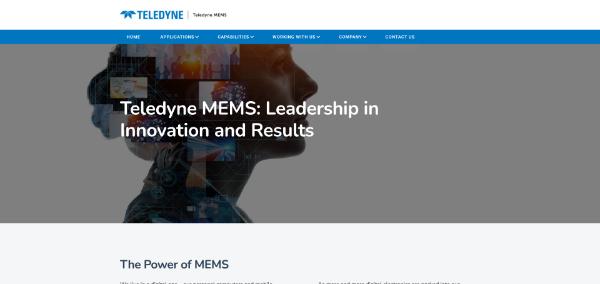
Teledyne MEMS has microfabrication technologies that work with diverse materials, such as silicon, glass, and polymer.
It combines processing methods like TSV, thin-film deposition, etching, and photolithography to perform extremely precise processing with a positional accuracy of ±0.0001 mm and a resolution of 0.00035 mm (when using 5X front to front/ASML). It manufactures MEMS devices with high density, multi-layer structures, and its strengths lie in the development of high-precision components for fields such as the medical, optical, and bio fields.
Fabrication services
Teledyne MEMS's fabrication services are primarily centered on photolithography, printing the circuit patterns used in semiconductors.
It also offers etching to remove unnecessary portions, processing methods for depositing films on substrates based on item usage purposes, and the drilling of microholes for wiring, all in-house.
Supported materials
Teledyne MEMS works with diverse wafer materials, such as silicon, polymer, and glass. It supports the manufacturing of devices for a wide range of fields, including the optical, medical, bio MEMS, and pressure sensor fields.
Supported sizes
Teledyne MEMS manufactures MEMS with its 150 mm and 200 mm wafer lines. The lines have a high degree of commonality, so processes set up on the 150 mm line can be transferred to the 200 mm line.
The 200 mm line also supports wafer-level bonding, integrating MEMS structures and CMOS circuits.
Citrogene is a dedicated glass microfabrication company. Its strengths lie in its high-precision laser processing technologies, which minimize thermal effects.
Thanks to its contactless processing methods, it is able of performing extremely small-scale processing with channel widths of 0.03 mm to 0.20 mm, hole diameters of 0.025 mm, and minimum channel and hole spacing of 0.10 mm, all without damaging the material. It can create 3D channels and microstructures on glass substrates, and excels at manufacturing high quality devices such as medical microfluidic chips and optical sensors.
Fabrication services
Citrogene's contactless laser microfabrication offers a greater degree of shape freedom and shorter turnaround than conventional drilling or photolithography.
It provides a wide range of services, including drilling, cutting, channel formation, surface processing, and more.
Supported materials
Citrogene primarily works with glass materials such as quartz, fused silica, BOROFLOAT, and alkali-free boroaluminosilicate, which have little thermal expansion.
It also works with inexpensive, easy-to-process glass materials such as soda lime and strong, scratch-resistant aluminosilicate.
Supported sizes
Citrogene can work with glass wafer substrates with diameters between 15 mm and 300 mm and thicknesses between 0.03 mm and 3.0 mm.
BMW Precision Machining specializes in the machining of small-diameter precision components using Swiss-style automatic lathes and multi-axes CNC lathes. It achieves a high level of precision, with tolerances of ±0.005 mm (0.0002 inch), and can perform mass production using its unmanned, automated equipment. It has a track record in fields requiring high precision and rapid turnaround, such as the medical device and electronic component fields.
Fabrication services
BMW Precision Machining is capable of mass-production of small-diameter precision components using its Swiss-style automatic lathes and multi-axis simultaneous machining using its CNC lathes.
It produces high-precision finishes of complex shapes, including drilling, threading, cutting, groove formation, and curved surface machining, all with a single chucking.
Supported materials
BMW Precision Machining primarily works with the materials used in metal components used in medical and electronic devices. The specific materials it works with are not noted on its website.
Supported sizes
The diameters supported by its bar and chucker equipment are indicated on its website, but the specific sizes supported vary depending on the equipment used.
For example, in the case of small-diameter bar machines, the maximum processing diameter is 10 mm for the SR-10J Type C, approximately 15.88 mm (5/8 inch) for the Star RNC-16, and approximately 19.05 mm (3/4 inch) for the Star SR20J II.
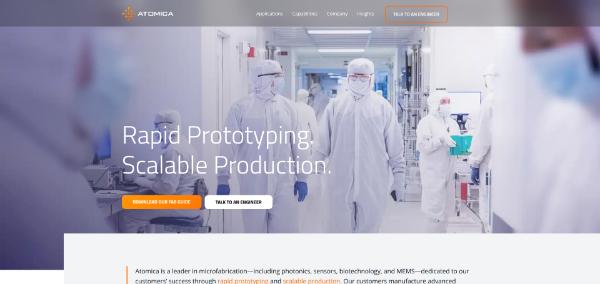
Atomica is a microfabrication company which offers submicron precision for fields such as the MEMS and photonics fields. In addition to creating three-dimensional structures and integrating heterogeneous materials using deep reactive-ion etching (DRIE), it offers wafer thinning services with a thickness control precision of ±0.005 mm. Its manufacturing supports 6-inch (approx. 152 mm) and 8-inch (approx. 203 mm) wafer substrates and it handles everything from prototyping to mass production using its ISO9001-certified cleanroom.
Fabrication services
From creating microscopic patterns using photolithography to etching and three-dimensional structure creation using plating and bonding, Atomica is a one-stop partner that performs all of the processes involved in MEMS manufacturing in-house.
Of particular note is its deep reactive-ion etching (DRIE), which uses plasma to etch deep vertical gaps in silicon. This technology is extremely useful for processing components such as MEMS or optical devices due to the deep, narrow grooves and through holes it can produce.
Supported materials
It works with materials such as silicon, SOI, glass, quartz, and III-V, and can stack and fuse heterogeneous materials that typical MEMS fabs struggle with.
It also provides plating services, so it can form high-profile components (molds, conductive coils, magnets, actuators, etc.).
Supported sizes
Atomica has a roughly 2,800 m2 cleanroom and works with both 6-inch and 8-inch wafers.
Viant Medical is a medical device manufacturing company that provides precision machining, tooling, and metal manufacturing services for medical device OEMs. Its capabilities include CNC milling and turning, Swiss and Laser Swiss machining, grinding, EDM, metal fabrication, finishing, testing, and quality assurance. It is especially relevant for projects that require high-tolerance medical metal components and support from manufacturability review to production readiness.
Machining and tooling services
Viant Medical supports precision machining processes such as CNC milling, CNC turning, Swiss machining, grinding, Wire EDM, and Conventional EDM.
Its tooling services also include DFM/DFX, CAD/CAM, mold flow analysis, process development, and mold types such as multi-shot, insert, and multi-cavity molds. These capabilities are useful when a project needs manufacturability input before tooling decisions are finalized.
Supported materials
Viant Medical works with medical-grade metals such as stainless steels, titanium alloys, Nitinol, cobalt alloys, and specialty alloys.
It also provides secondary processes such as polishing, electropolishing, passivation, heat treating, anodizing, laser marking, and welding.
Supported sizes
For precision metal tubing, Viant Medical lists a size range of 0.07 mm to 28 mm OD, covering both thin-wall and thick-wall tubing.
This makes it a candidate for medical device programs that require small-diameter tubing, hypotube components, or custom tubing with tight dimensional control.
Tecomet is a medical device and aerospace manufacturing company that provides precision manufacturing solutions for implants, instruments, cases, trays, and complex components. Following its combination with Orchid, the company presents itself as one stronger manufacturing partner for medical device programs. Its capabilities include precision machining, additive manufacturing, photochemical etching, casting, forging, welding and bonding, finishing, prototyping, and packaging support.
Machining and manufacturing services
Tecomet supports precision machining processes such as multi-axis milling, mill turning, EDM, CNC flute grinding, gundrilling, laser processing, and welding.
It also provides broader manufacturing capabilities such as additive manufacturing, casting, forging, photochemical etching, finishing, product prototyping, and sterile cleanroom assembly. These services are useful for projects that require fully finished medical components from development through production.
Supported materials
For additive manufacturing, Tecomet lists materials such as stainless steel, plastic, and titanium.
Its broader capabilities also include post-processing and finishing services such as abrasive blasting, shot peening, ultrasonic cleaning, welding, brazing, bonding, machining, and passivation.
Supported applications
Tecomet supports medical markets including hip, knee, shoulder, spine, trauma and extremities, and minimally invasive surgery.
Its product areas include implants, surgical instruments, and cases and trays. This makes the company relevant for medical device programs that need precision manufacturing across implants, instruments, and production-ready components.
Resonetics is a micro-manufacturing company that provides metal fabrication and precision machining services for MedTech and life sciences applications. Its metal fabrication capabilities include centerless grinding, CNC machining, photochemical machining, microforming, micro waterjet cutting, electropolishing, Nitinol shape setting, and electrical discharge machining. It is especially relevant for projects that require small, complex medical components and coordinated support from prototyping through production.
Metal Fabrication and Machining Services
Resonetics offers CNC processes including EDM, Swiss machining, turning, and multi-axis milling, allowing the manufacturing method to be selected around the component’s geometry, material, tolerances, and production requirements.
Its additional capabilities include centerless grinding for medical wire and tubing, microforming for complex shapes and tight tolerances, and photochemical machining for complex, burr-free thin-sheet metal components.
Precision Cutting and Finishing
Micro waterjet cutting supports intricate parts that require smooth, taper-free sidewalls without introducing thermal or mechanical damage. Resonetics also provides wire and sinker EDM for non-contact machining of precision metal components.
Post-processing capabilities include electropolishing and Nitinol shape setting. These services are relevant when a project requires controlled surface finishing, material-property management, or several manufacturing steps from one supplier.
Medical Applications
Resonetics applies its metal fabrication capabilities to medical wire, tubing, delivery-system components, mandrels, implants, and other precision components used in minimally invasive and life sciences applications.
Goodfellow is an advanced-materials supplier that provides microfabrication and micromachining services through Potomac Photonics, the microfabrication division of the Goodfellow Group. Its capabilities include laser micromachining, small-hole drilling, micro laser welding, laser patterning, micro CNC machining, micro 3D printing, hot embossing, bonding, and assembly. It is especially relevant for projects that require specialized material sourcing and precision micro-scale processing within the same supplier group.
Microfabrication and micromachining services
Goodfellow and Potomac support processes such as precision cutting, drilling, ablation, patterning, welding, embossing, adhesive dispensing, and component assembly.
Projects can progress from initial prototyping and process development to repeat production, depending on the material, feature geometry, tolerances, inspection requirements, and production volume.
Supported materials
Goodfellow works with material categories including metals and alloys, polymers and films, ceramics, glass, silicon wafers, foils, tubes, and coated materials.
Published examples include stainless steel, copper, titanium, Nitinol, aluminum, Kapton, PEEK, PMMA, polycarbonate, PTFE, Mylar, and borosilicate glass. Because processing results can vary by grade, thickness, composition, coating, and surface condition, material compatibility should be confirmed for each project.
Applications and project support
Published applications include medical devices, microfluidics, electronics, microelectronics, photonics, and optical components.
Goodfellow can be considered for projects that require small holes, fine patterns, miniature welded components, replicated polymer channels, precision bonding, or a combination of several manufacturing processes.
Microfabrication is performed using various methods, such as high-precision cutting, laser cutting, and etching. Each of these methods has different materials that they are best suited for, including metals, plastics, and the like. To select the partner that's right for you, it is vital to carefully consider their technical capabilities, equipment, and processing track record. Take a close look at whether they can achieve the quality you need and if they have the right equipment and a proven track record with the fabrication methods you want.
[Choose by Fabrication Type] Top Three Recommended Microfabrication Partners
For difficult-to-cut materials
Koyo High Precision
Source: Koyo High Precision website (https://koyohighprecision.com/)
Examples of supported materials
Tungsten, molybdenum, tantalum,etc.
Main fabrication technologies
Micro drilling
Lathe machining
Milling
Why We Recommend
They perform fabrication for a wide range of sizes, from ⌀3 to 220 mm,and they can handle everything from prototype development to mass production fabrication for difficult-to-cut materials
They can achieve a fabrication precision of ±3 μm even for tungsten,which is known for being difficult to cut.