Stainless Cutting for Microfabrication
Open Table of ContentsClose Table of Contents
Many suppliers can cut stainless steel, but far fewer can produce micro-scale features with the consistency that precision parts require.
Stainless cutting is not one single capability. For simple shapes, many suppliers can cut stainless steel. But when a part includes micro holes, narrow slots, thin walls, or tight tolerances, the real issue is no longer cutting alone. It becomes a microfabrication decision.
If the application depends on edge quality, burr control, repeatability, or very small features, buyers should evaluate a supplier as a precision manufacturing partner, not just a cutting vendor.
Key Takeaways
- The right supplier depends on feature size, tolerance, and required edge condition.
- For thin stainless parts with micro holes or narrow slots, microfabrication capability matters more than general sheet-cutting capacity.
- A strong supplier review should cover burr control, repeatability, inspection capability, and experience with the target stainless grade.
When Stainless Cutting Becomes a Microfabrication Problem
Standard stainless cutting pages usually focus on material grade, thickness range, and general shape complexity. That is useful, but it is not enough for precision parts.
Microfabrication becomes the real issue when the part includes very small holes, fine slots, thin sections, or dimensions that must stay stable through downstream assembly. In these cases, buyers should ask not only whether stainless can be cut, but how small the critical feature is, how the edge is controlled, and how the result is verified.
Two Supplier Examples That Show the Difference
Koyo High Precision: Stainless machining examples with micro-scale detail
Source: Koyo High Precision Official Website (https://koyohighprecision.com/materials/#stainless)
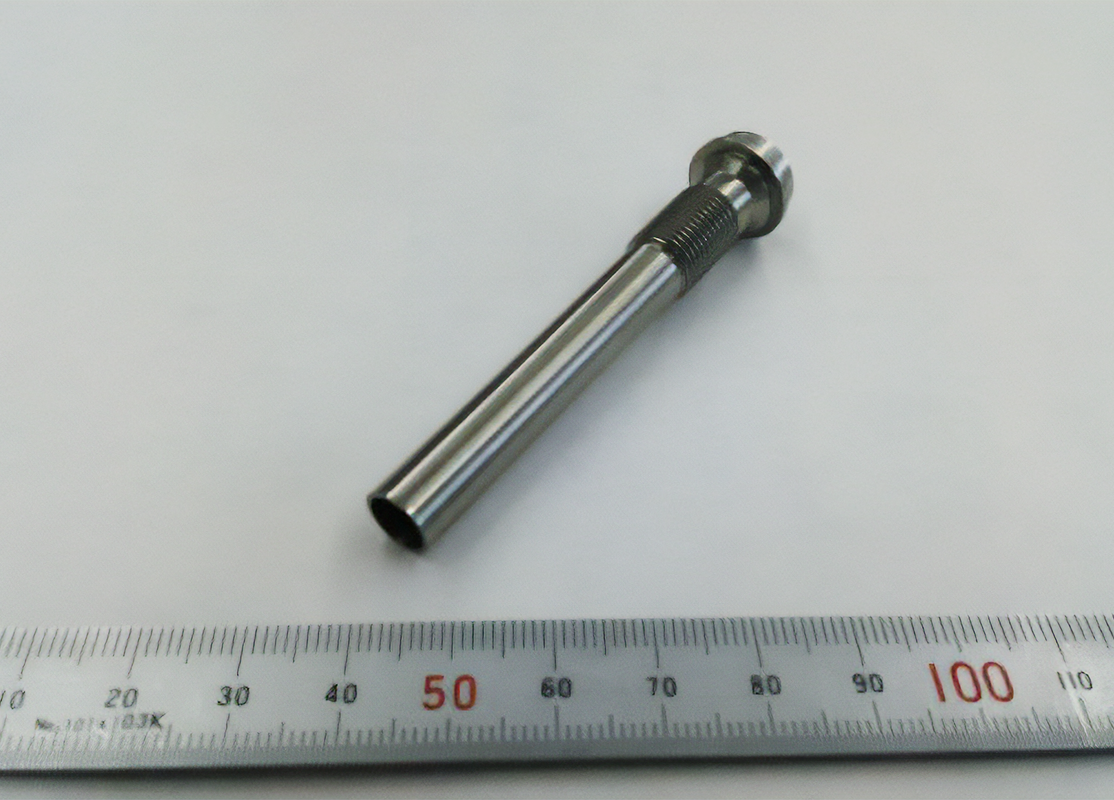
Koyo High Precision presents stainless examples across grades such as SUS303, SUS304, SUS316, SUS430, and SUS440C. More importantly, the examples include details that matter to technical buyers, such as long through holes, hard turning after heat treatment, an inner diameter tolerance of ±4 microns, a surface roughness note, extra-fine processing at φ0.1, and a φ0.2 mm micro-hole example.
Key Spec
| Series / Example |
Material |
Published specs |
| Long through-hole example |
SUS303 |
- Inside diameter: φ6 × L75 mm
- Feature type: long through hole
|
| Precision inner-diameter example |
SUS440C |
- Inner diameter: φ5 × L30 mm
- Tolerance: ±4 μm
- Surface roughness: Ra 0.6
- Process note: hard turning of inner diameter after heat treatment
|
| Lathe + machining example |
SUS430 |
- Process note: lathe cutting + machining
|
| Heat-treated example |
SUS440C |
- Process note: complete heat treatment
|
| Extra-fine processing example |
Stainless (series page example) |
- Feature size: φ0.1
- Length: L15 mm
- Process note: cutting
|
That makes the page useful not because it simply says "stainless is supported," but because it shows what kind of feature size and precision discussion a serious buyer should look for.
Company Information
| Company Name |
Koyo High Precision Co., Ltd. |
| Location |
Churaku Tamaki-cho, Watarai-gun, Mie 519-0412, Japan |
| Telephone |
+1-847-593-7000 |
| Website |
https://koyohighprecision.com/ |
Potomac Photonics: Stainless laser micromachining for very small features
Source: Potomac Photonics Official Website (https://www.potomac-laser.com/project-gallery/#gallery-28)
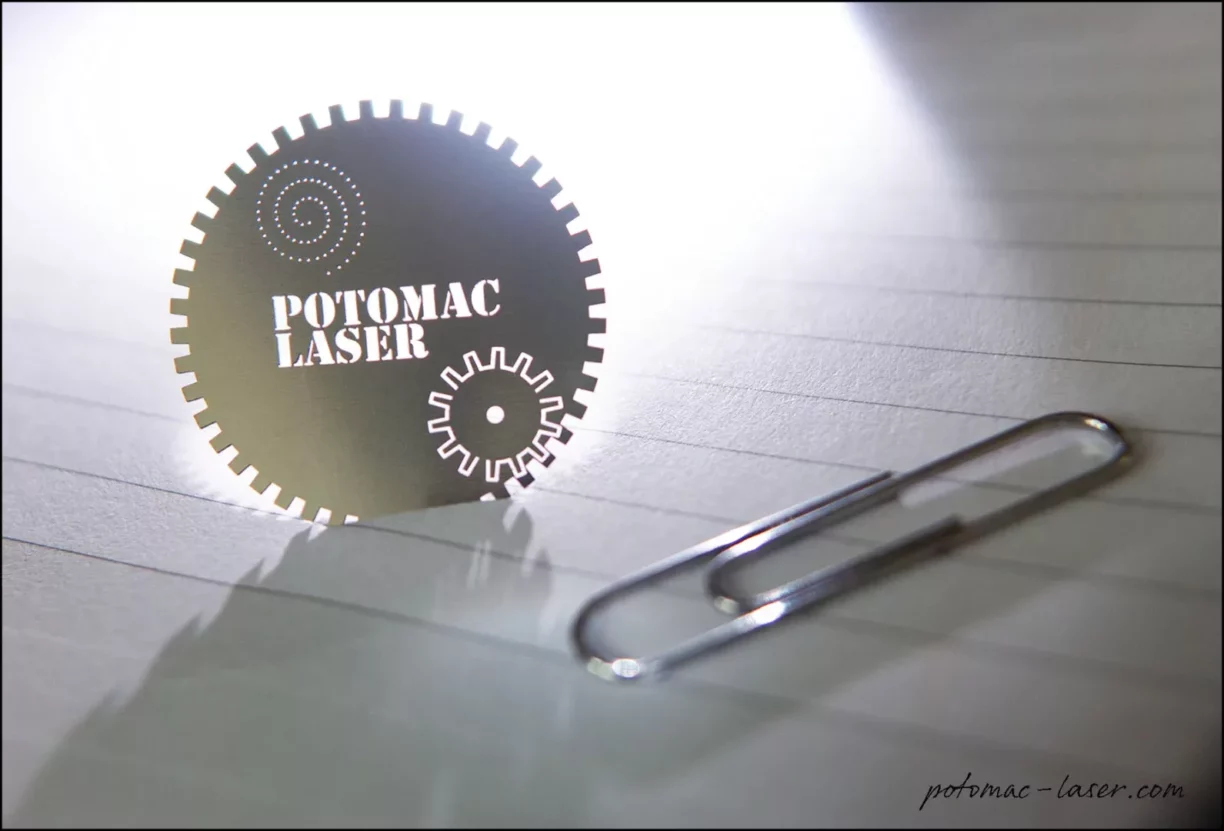
Potomac Photonics shows stainless laser micromachining examples such as 0.004-inch-wide slots in 0.015-inch-thick stainless steel and very small slots and microholes in stainless steel tube.
Key Spec
| Series / Example |
Material |
Published specs |
| Laser micromachining – stainless steel |
Stainless steel |
- Slot width: 0.004 inch
- Material thickness: 0.015 inch
- Feature type: laser-cut slots
|
| Laser micromachining of stainless steel tube |
Stainless steel tube |
- Feature type: very small slots and microholes
- Published minimum feature size: as small as 15 microns
|
For buyers, the value of these examples is clear: some stainless cutting requirements are better evaluated as micromachining work, especially when feature size and edge control matter more than standard sheet-cutting capacity.
Company Information
| Company Name |
Potomac Photonics |
| Location |
1450 South Rolling Road, Baltimore, MD 21227 USA |
| Telephone |
443-543-5737 |
| Website |
https://www.potomac-laser.com/ |
What to Check Before Choosing a Supplier
Before requesting a quote, buyers should confirm five points:
- minimum feature size
- burr and edge-quality requirements
- tolerance stability on the critical dimensions
- experience with the required stainless grade
- inspection and measurement capability
A supplier that only explains machine capacity or material availability may still be a poor fit for micro-scale stainless parts. The better question is whether the supplier can repeatedly achieve the specific geometry the part requires.
Need More Than Standard Stainless Cutting?
If your part includes micro holes, narrow slots, thin walls, or tight tolerances, it makes sense to compare suppliers from a microfabrication perspective, not just a cutting-service perspective.
Explore our main guide to microfabrication suppliers to compare capabilities, use cases, and evaluation points for precision stainless components.