Xometry
Open Table of ContentsClose Table of Contents
Source: Xometry's Official Website (https://www.xometry.com/)
A company that uses a network of manufacturers to handle sub-millimeter precision component manufacturing, prototyping, and more through a single platform.
This page introduces its microfabrication features, the processing services it offers, processing examples, and more.
Xometry's microfabrication services
Xometry performs manufacturing with tight tolerances of ±0.001 to 0.005 inch, primarily through precision CNC machining.
It can handle even tighter tolerances if supplied with drawings.
It publishes design guidelines and manufacturing standards for achieving greater microstructure uniformity, and it provides integrated support for everything from pre-processing design optimization to quality verification.
It can also manufacture high-precision metal and plastic parts that require sub-millimeter precision, such as the parts used in semiconductor production equipment and electronic devices.
Fabrication services
Xometry supports a wide range of processes, including precision machining using CNC milling machines and lathes, wire electrical discharge machining, laser cutting, metal bending, tube laser bending, injection molding, die-casting and extrusion, die and plastic component mass production, and 3D printing, including SLA, SLS, MJF, and DMLS.
Supported materials
Xometry's precision processing can be used on a wide range of typical metal materials, such as aluminum (6061, 7075, 7050, MIC-6, etc.), stainless steel (303/304/316/17-4, etc.), carbon steel and tool steel, titanium (Grade2/5), copper, brass, bronze, and nickel alloys.
Supported sizes
Xometry has established a manufacturing network that enables it to work on extremely large workpieces.
For example, Xometry can perform CNC milling of articles measuring up to 80 x 48 x 24 inches. Equipment and specifications will need to be considered separately for microfabrication (at the sub-millimeter level).
CHECK Finding Your Partner Based on Processing Style
Xometry offers options including metal microfabrication using precision MCM machining and wire electrical discharge machining, high-resolution 3D printing such as SLA and DMLS, and microextrusion, all through a single platform.
This means that it can solve the problems faced by projects involving components with complex shapes that require the use of different processing techniques for different purposes.
Specifically, it is particularly well-suited for the development divisions and prototyping teams of manufacturers of semiconductor equipment, precision measurement devices, medical devices, and electronic components.
This site recommends various microfabrication service providers for companies seeking microfabrication partners.
Examples of Xometry's microfabrication
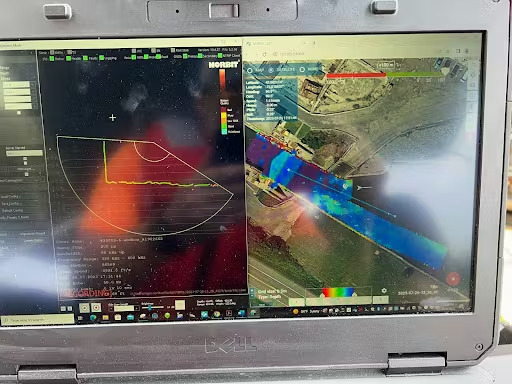
Using precision CNC machining to make a multi-beam sonar system
that can be installed in small vessels
Source: Xometry's Official Website (https://www.xometry.com/resources/case-studies/mclaren/)
A project that was tasked with high-resolution mapping New York’s canal system needed to be able to install multi-beam sonar systems in small boats.
These boats were too small for the brackets that came with the systems, so the project team decided to make new brackets that were smaller but would still keep the sensors level.
A CNC-milled bracket whose main component was a 10 mm-thick aluminum plate was quickly fabricated.
This bracket enabled the team to acquire highly accurate depth data even in shallows and narrow sections.
They were able to create a precise map that assisted in infrastructure inspections and making navigation safety decisions.
* Source: Xometry's Website (https://www.xometry.com/resources/case-studies/mclaren/)
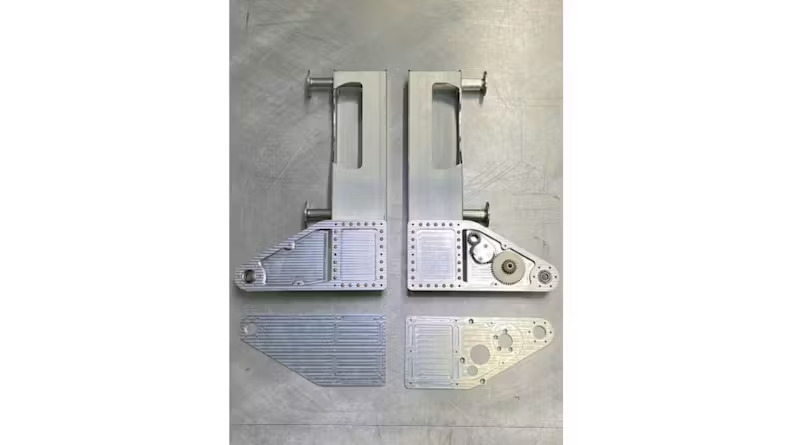
Creating highly reliable CNC precision components
with complex shapes for use in landing gear mechanisms
Source: Xometry's Official Website (https://www.xometry.com/resources/case-studies/darkaero/)
A team developing a prototype light aircraft found itself needing CNC components that were both structurally strong and high levels of assembly precision for use in landing gear mechanism pivot pins, gearbox housings, and the like.
It outsourced the manufacturing of these components to Xometry, which used its lathes and turning equipment together to rapidly manufacture and deliver the components used to retract and extend the front landing gear.
These metal parts offered the strength and high precision needed for the lightweight aircraft, which was primarily made of composite materials, so the development team was able to stick to its development schedule and perform flight testing.
* Source: Xometry's Website (https://www.xometry.com/resources/case-studies/darkaero/)
Company Information
| Company Name |
Xometry, Inc. |
| Location |
6116 Executive Boulevard, Suite 800
North Bethesda, MD 20852
USA |
| Telephone |
+1-(800)-983-1959 |
| Website |
https://www.xometry.com/ |